The current situation also creates an opportunity. Instead of simply finding a new light source for an old installation, this is a chance to look at the complete lighting solution, from energy use and maintenance to working environment and long-term cost.
– The natural reaction is to ask what LED product can replace the fluorescent tube you have today. But we think there is a more important question: if you were designing the lighting for this facility today, would you design it the same way? In many cases, probably not, says Peter Sandberg, CSCO at Aluwave.
A major lighting transition is already underway
Fluorescent lamps have traditionally been common in industrial facilities, offices and public environments. But their use is changing rapidly. in August 2023, the EU banned production and import of common T5, T8 and compact fluorescent lamps in the updated EU RoHS directive. There are still some on stock that can be sold, but inventory is rapidly declining.
Swedish Elsäkerhetsverket describes the transition as a gradual phase-out over several years. For organisations with large numbers of existing luminaires, the transition therefore becomes more than a purchasing question. It becomes a lifecycle decision.
Look beyond the replacement cost
The cheapest solution on installation day is not necessarily the most economical over the lifetime of the lighting system. Energy consumption is one factor. But operating hours, maintenance, installation, accessibility, expected lifetime and disruption when components need to be replaced can all affect the total cost.
This becomes particularly important in industrial environments, where lighting may operate for long hours and maintenance can require lifts, shutdowns or access to difficult locations.
– When you start looking at lifecycle cost instead of only the purchase price, the calculation changes. Energy matters, but so do maintenance, lifetime and how much work it takes to keep the installation running. The right solution is the one that makes sense over time, says Peter Sandberg.
Retrofit, replace – or rethink?
Moving from fluorescent lighting to LED does not necessarily mean replacing every complete luminaire. In some applications, retaining existing equipment and upgrading it with an appropriate LED solution may make sense. In others, replacing the luminaire or redesigning parts of the lighting installation can provide a better result.
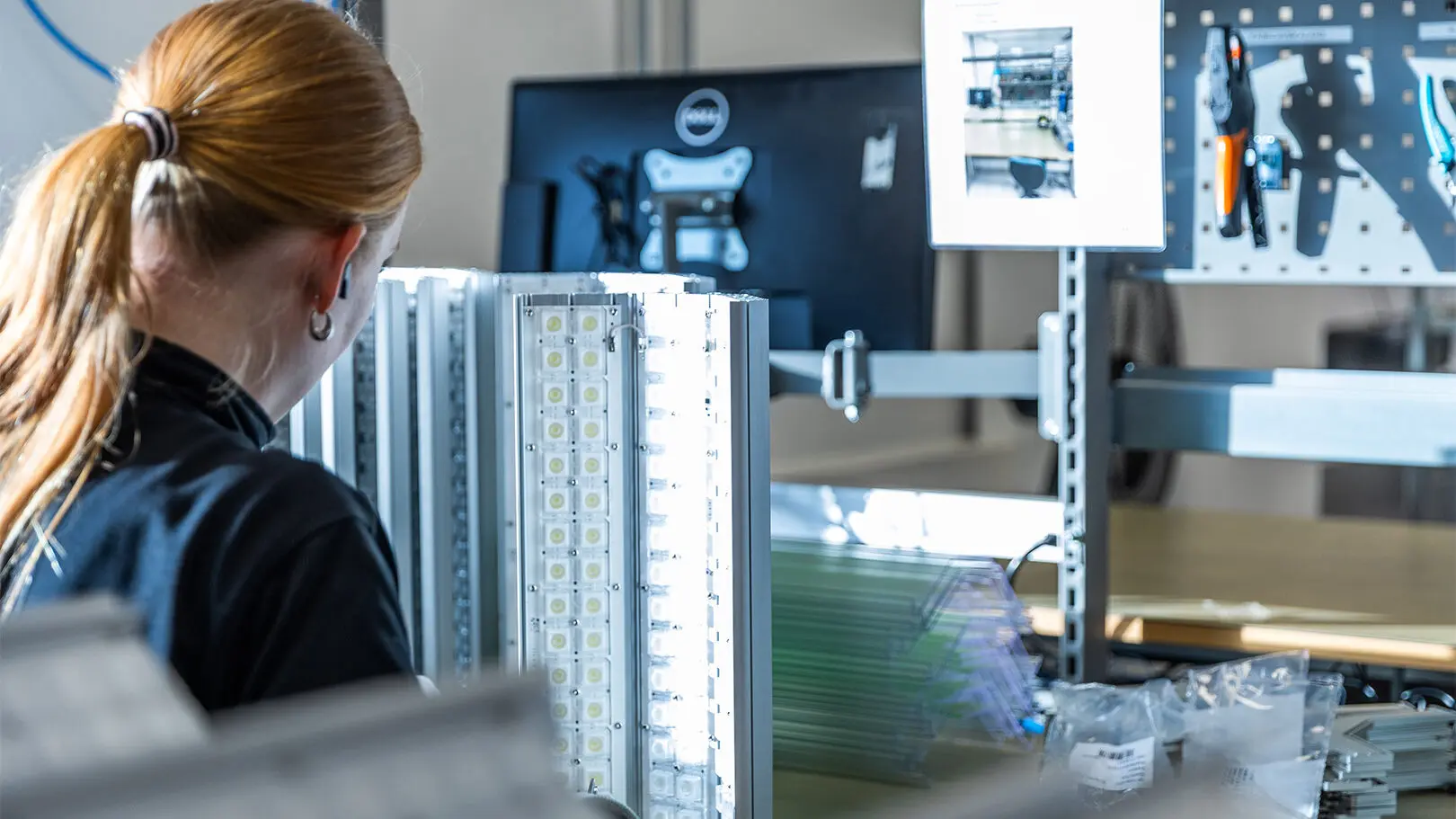
Aluwave works with both professional industrial LED luminaires and customised LED retrofit solutions, with a focus on long product lifecycles, energy efficiency and solutions that can be maintained or upgraded over time. We also offer Ex-rated LED modules designed specifically to replace fluorescent lamps in demanding hazardous environments. The important point is that there is no universal answer. The existing installation, operating environment and future requirements need to determine the solution.
More than an energy calculation
A lighting upgrade also provides an opportunity to look at what the facility actually needs today. Is light distributed where it is needed? Could controls or sensors reduce unnecessary operating hours? Has the way the facility is used changed since the original installation was designed? And does the existing lighting still provide the visual conditions required for the work being performed?
– The fluorescent phase-out forces many companies to do something eventually. Our view is: use that moment wisely. Don’t just replace old technology with new technology. Look at what the facility will need for the coming years and build the solution around that, says Sandberg.
17 million reasons to look forward
The phase-out of fluorescent technology creates a significant transition for Swedish businesses and public organisations. For companies willing to look beyond the fluorescent tube itself, it can become an opportunity to reduce energy use, rethink maintenance and create a lighting solution better suited to the future.
The question is not only what should replace your fluorescent tubes. It is what your lighting should look like for the next generation.